
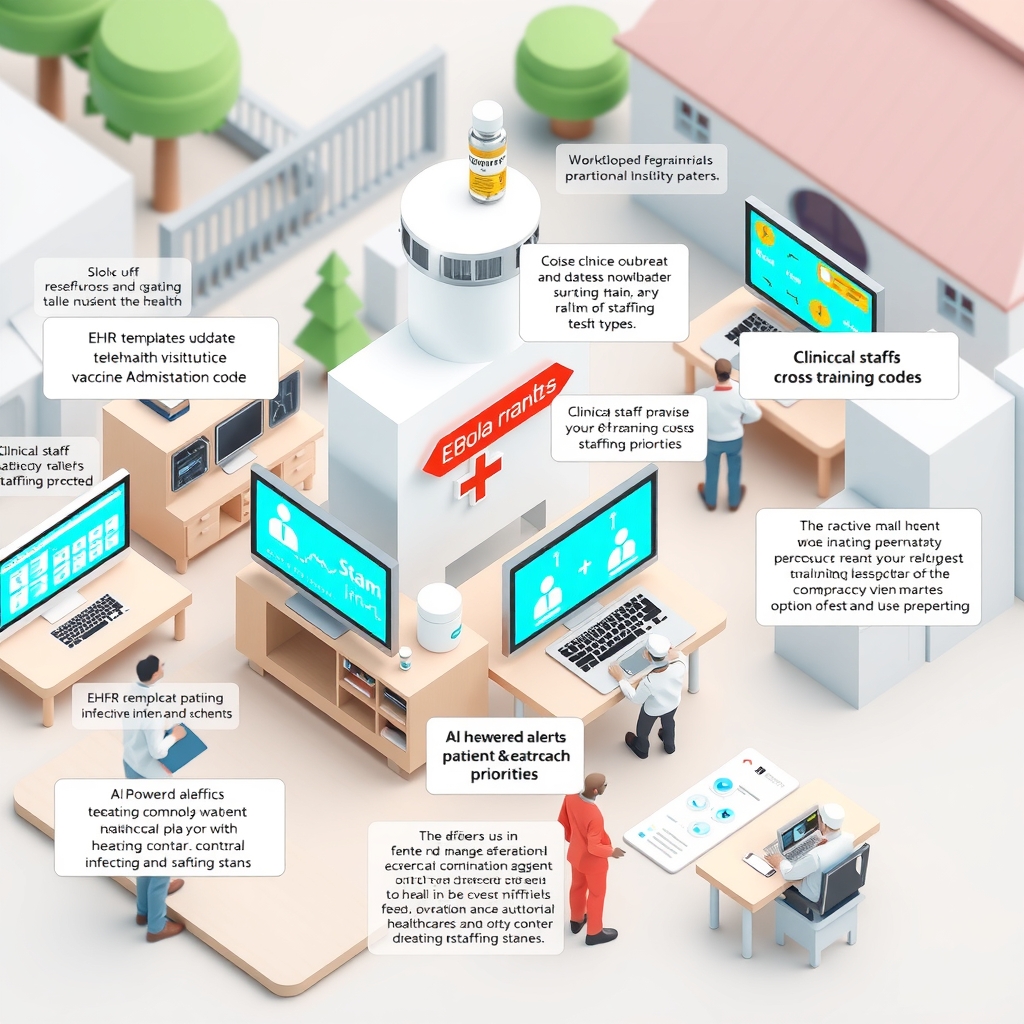
The latest outbreak update — an Ebola vaccine is reportedly near — demands immediate operational planning for ambulatory clinics and health systems. For busy providers, the priority is minimizing disruption to patient care while protecting staff, revenue, and value-based care metrics.
Operational priorities: infection control, workflows, and staffing
Even before wide vaccine distribution, clinics must tighten screening, PPE protocols, and isolation pathways. Quick updates to front-desk scripts, telehealth triage rules, and EHR systems prompts reduce exposure risk and limit no-shows that erode clinic throughput.
Staffing plans should include cross-training and surge schedules; standing up hotline shifts or telemedicine blocks keeps routine revenue channels open. Coordinate with local public health for vaccine prioritization and align your infection-prevention documentation with compliance audits.

Revenue impact and tech levers: EHRs, digital health and value-based care
Outbreaks cause short-term revenue pressure from cancelled visits and higher PPE costs, but smart use of EHR systems and digital health can blunt losses. Configure EHR visit types and billing codes for telehealth, vaccine administration, and outbreak-related screening to capture revenue and avoid claim denials.
Longer term, value-based care contracts reward outcomes and population health management — proactive outreach and vaccination drives protect shared savings. Integrate AI in healthcare decision support to flag high-risk patients, automate outreach, and analyze no-show patterns so care teams can prioritize interventions without adding clerical burden.
Actionable takeaways:
- Update EHR templates now: add screening flows, vaccine administration codes, and telehealth modifiers to reduce revenue leakage.
- Stand up telehealth and digital health outreach for high-risk panels to maintain visits and meet value-based care metrics.
- Use AI in healthcare tools to prioritize outreach and predict staffing needs; cross-train staff to cover surge roles.
Evolving policy items — from Medicaid work rules to regulatory actions in the private sector — can shift payer mix and patient demand; keep your revenue-cycle team looped in. Monitor public health guidance for vaccine rollout and adjust scheduling and inventory forecasts accordingly.
Conclusion: Prepare quickly, document thoroughly, and lean on technology. Strengthening EHR workflows, expanding digital health options, and aligning with value-based care incentives will protect clinic operations and revenue as the situation evolves.
Leave a Reply