
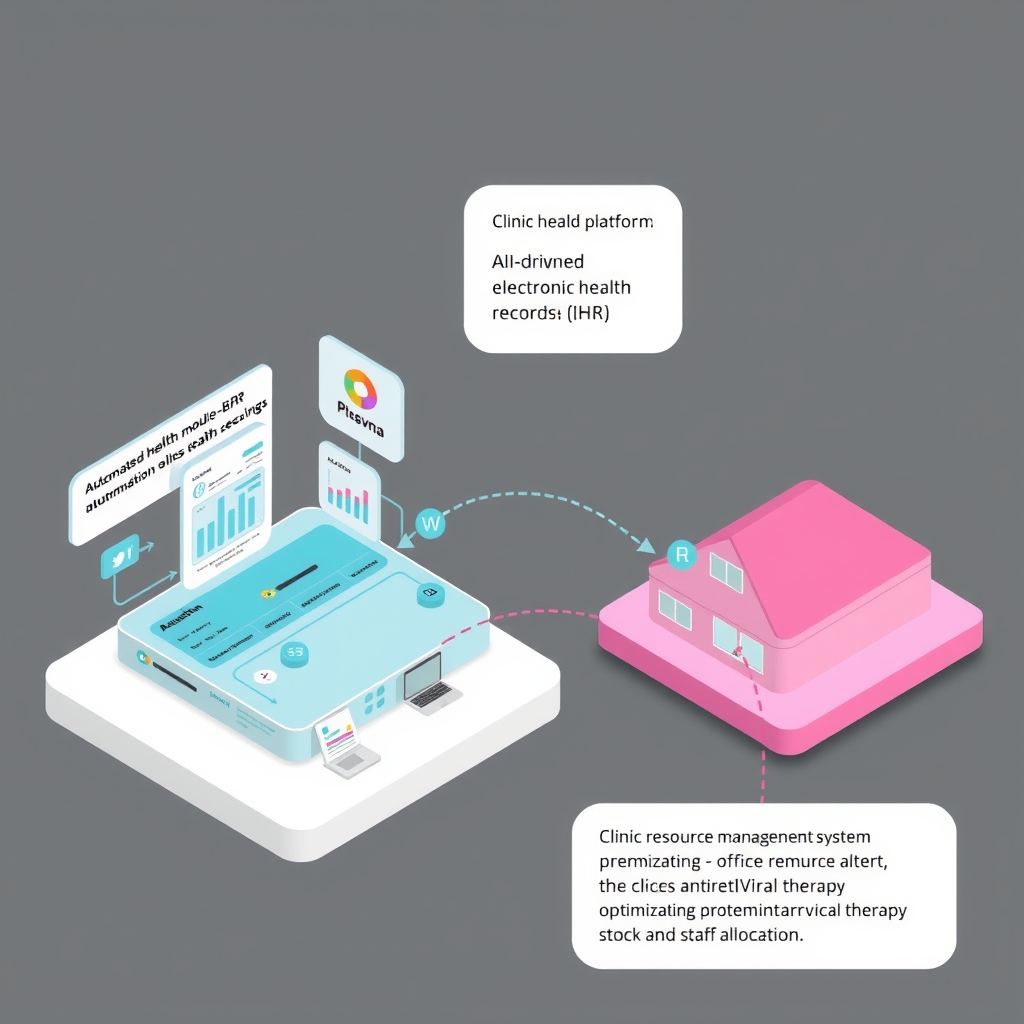
Why the KFF Drop Matters to Clinics and Providers
KFF’s finding that donor government funding for HIV fell by $2.1 billion (about 25%) in 2025—driven largely by declines in U.S. contributions—is more than a headline. For frontline clinics in low- and middle-income settings and for providers managing HIV populations, the shortfall signals immediate pressures on staffing, testing, antiretroviral (ART) procurement, and prevention programs.
Cuts at this scale, the largest single-year decrease since the global scale-up began, will force programs to prioritize services, delay technology upgrades, and shift toward cost-recovery or domestic financing models—each with downstream effects on clinic operations and revenue.

Operational Responses: Digital Health, EHRs and Smart Resource Use
Clinics can blunt the impact by leaning into digital health tools that improve efficiency and outcomes. Optimized EHR systems that automate routine documentation, flag adherence gaps, and streamline procurement workflows reduce clinician time spent on admin tasks and lower supply waste—preserving capacity when budgets shrink.
AI in healthcare offers targeted support: predictive models can prioritize patients at highest risk of viral rebound, forecast ART stockouts, and identify inefficiencies in clinic flow. These interventions support value-based care approaches—shifting focus from volume to measured outcomes—which can make funding more defensible to payers and domestic backers while protecting revenue through performance-linked contracts.
Key operational consequences to expect: tighter commodity budgets, increased task-shifting to lower-cost cadres, deferral of nonessential infrastructure upgrades, and accelerated integration of HIV services into broader primary care platforms to share costs.
Actionable takeaways
- Audit EHR workflows this quarter: eliminate redundant fields, enable automatic adherence alerts, and free clinician time to focus on retention and complex cases.
- Pilot low-cost AI tools for forecasting ART demand and no-show risk to reduce stockouts and prioritize outreach resources.
- Negotiate value-based care agreements with funders or insurers that tie payments to viral suppression and retention, protecting revenue when donor grants decline.
For clinic leaders, the funding shock is an operational stress test. Rapid adoption of digital health and prudent EHR optimization can preserve clinical quality while trimming costs. Engaging payers on value-based arrangements and demonstrating measurable outcomes will be critical to replace lost donor funds and stabilize revenue streams.
Short-term triage—protecting ART supply chains and high-risk patient follow-up—must be paired with medium-term investments in technology and care redesign. That combination improves resilience whether funding rebounds or remains constrained.
Leave a Reply