
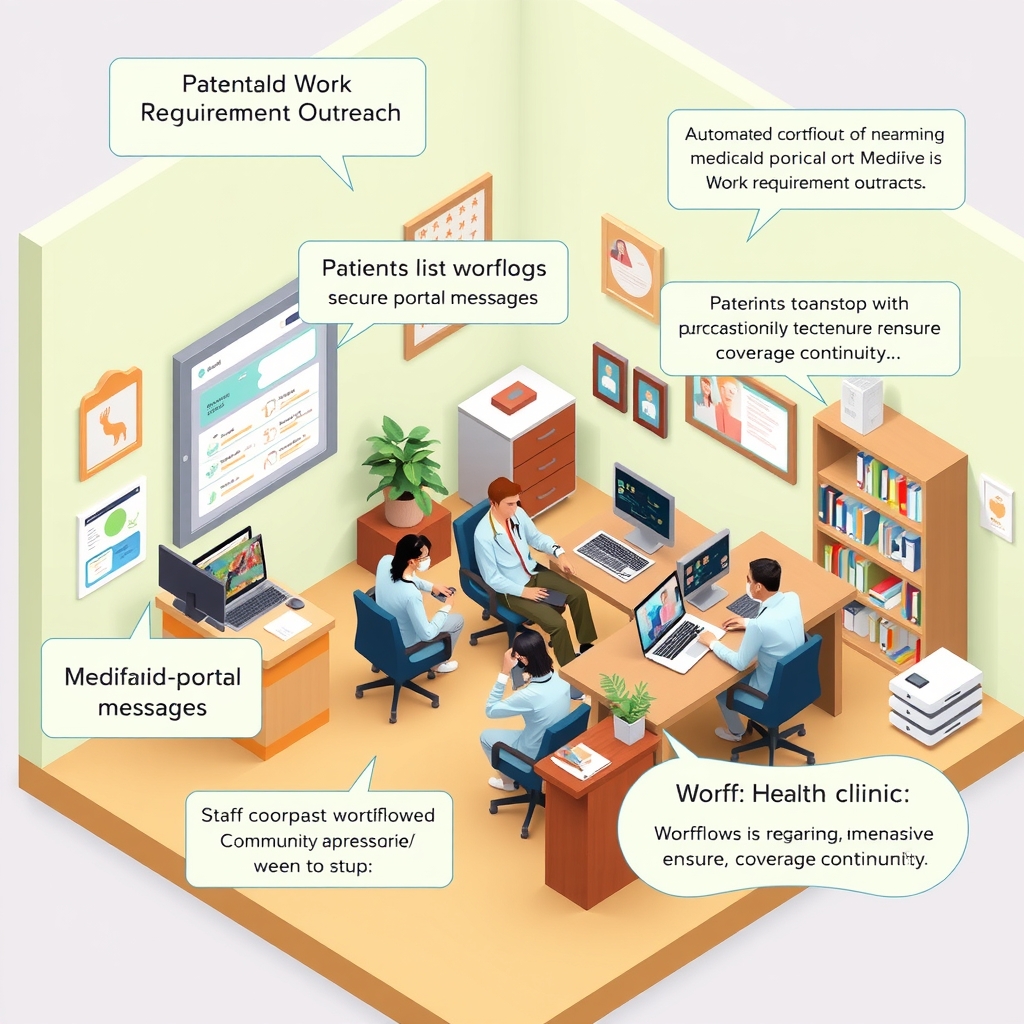
New federal rules require state Medicaid programs to send notices and run outreach when work requirements affect eligibility. Clinic managers must translate those obligations into operational changes to avoid coverage churn and revenue loss.
What clinics need to know about federal outreach rules
Federal guidance mandates specific notification timelines and methods when states impose or change Medicaid work requirements; many states add phone calls, public ads, and in-person or partner-led outreach. That increases the likelihood patients will receive mixed messages and creates windows where eligible patients may not complete reenrollment, directly impacting visit volume and outpatient revenue.
Clinics should view state outreach as a parallel channel that can either reduce or amplify administrative burden. If outreach fails to reach patients, clinics will absorb enrollment follow-ups, eligibility calls, and uncompensated care—especially in value-based care contracts where enrollment and risk attribution affect shared savings and capitation payments.

Operational steps to protect revenue and care continuity
Start by mapping which populations in your EHR systems are affected and triggering proactive outreach. Use EHR systems and digital health tools to flag at-risk patients, automate secure messages, and schedule enrollment support visits. Integrating basic AI in healthcare tools—like predictive lists of patients likely to lose eligibility—can prioritize staff time and reduce churn.
Coordinate with community partners and state outreach campaigns to avoid duplication and fill gaps. Train front-desk and care coordination teams to handle required documentation, and build a short workflow for quick eligibility verification during check-in so billing and revenue-cycle staff can minimize denials and retroactive eligibility issues.
- Audit EHR workflows weekly: run a daily report of patients flagged as at-risk for coverage loss and assign follow-up tasks.
- Automate simple outreach: use secure portal messages and IVR calls from your digital health stack to confirm contact info and prompt reenrollment steps.
- Link finance and care teams: create a rapid eligibility-check protocol at intake to reduce denied claims and protect value-based care revenue.
State outreach to comply with federal requirements will vary in reach and effectiveness; clinics that pair proactive EHR-driven workflows with simple AI prioritization and coordinated community outreach will better preserve revenue and patient access. Start small: flag, automate, and train—then scale tools like digital health platforms and analytics to sustain gains.
Leave a Reply