
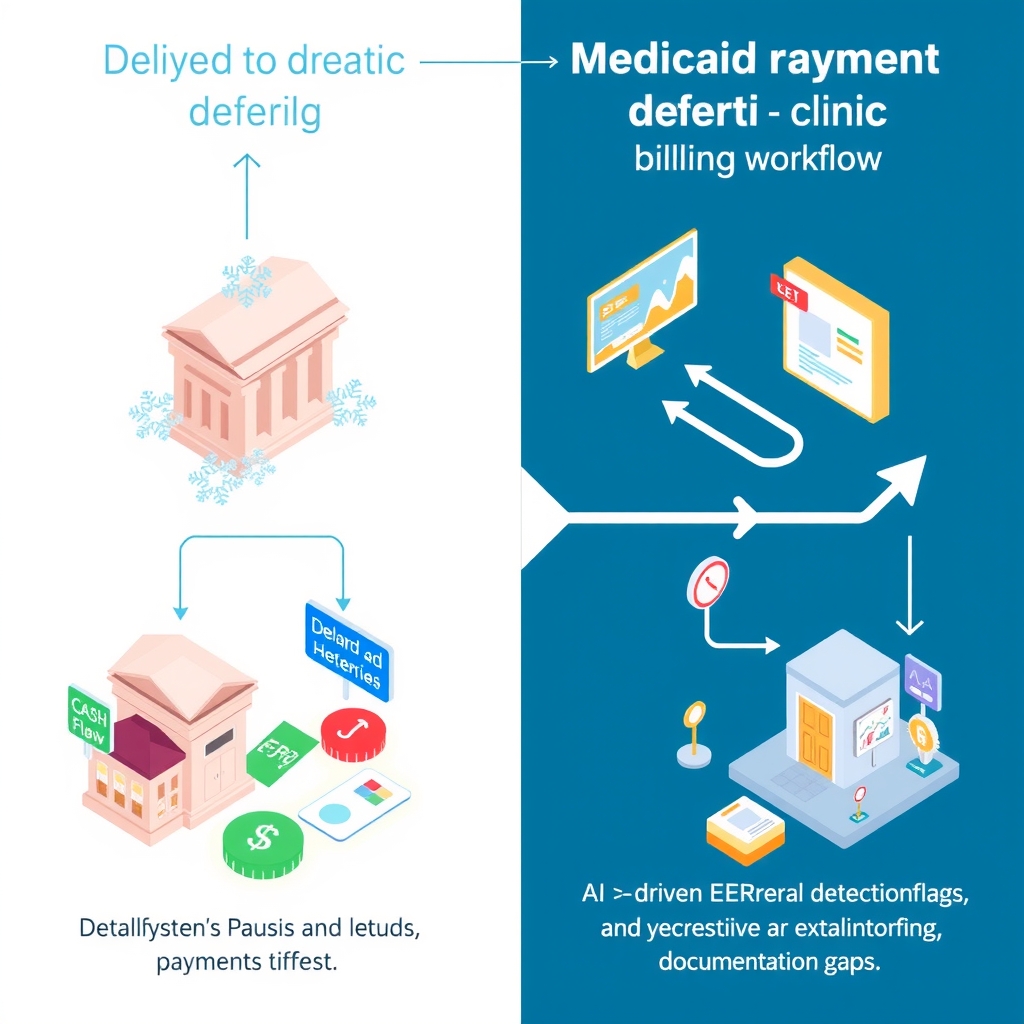
The federal government has announced deferral of more than $1 billion in Medicaid payments to California and Minnesota due to suspected fraud and noncompliance. For clinic leaders, that headline translates into immediate cash-flow, compliance and billing workflow risks that can impact revenue and patient access.
Short-term financial and operational fallout for practices
When state Medicaid disbursements are paused, clinics that rely on timely Medicaid reimbursements face delayed payroll, vendor disputes and interrupted care coordination. Federally driven deferrals can cascade to upstream vendors, behavioral health partners and community programs, creating operational friction across the care continuum.
These events expose weak points in billing and EHR systems: coding inconsistencies, unsupported claims, and gaps between clinical documentation and claims submission. Digital health tools and AI in healthcare that flag anomalies can help, but many practices lack integrated workflows or governance to act on those alerts quickly.

Practical fixes: tighten revenue cycle, use tech smartly, protect value-based contracts
Actionable steps start with an immediate revenue-cycle triage: prioritize high-value claims, run aged receivables reports by payer, and establish a contingency cash plan. Ensure your EHR systems are exporting complete encounter documentation to billing, and lock down a short audit loop between coders, clinicians and the revenue-cycle team to close documentation gaps that trigger payer holds.
Medium-term, invest in digital health controls that align with compliance priorities: implement AI-driven anomaly detection to flag suspicious billing patterns, but pair it with human review protocols to avoid false positives that interrupt care. For organizations in value-based care arrangements, maintain transparent communication with payers and document quality metrics meticulously to protect shared savings and avoid retrospective recoupments.
Actionable takeaways
- Run a 30/60/90-day payer-impact scenario: identify roles that will feel delayed Medicaid cash, and set short-term funding or payment plans.
- Audit top-coded procedures and EHR-to-billing interfaces; fix documentation gaps that trigger deferrals.
- Deploy AI in healthcare tools for fraud detection, but retain clinician-led review to preserve care continuity and reduce false claims.
Conclusion: Clinics must treat payment deferrals as a revenue-cycle and compliance emergency. Tighten EHR systems, lean on targeted digital health and AI tools for detection, and shore up cash and payer communications to protect operations and value-based care outcomes. Quick, coordinated fixes now reduce the risk of prolonged financial and service disruptions.
Leave a Reply