
AI in healthcare is shifting from pilot projects to routine clinic workflows, but regulation and governance lag. Busy providers need crisp guidance on operational risks, revenue implications, and where to invest in safe, scalable tools.
What regulators mean for clinic operations
Policymakers are drafting guardrails that will define how algorithms are validated, monitored and reported. Expect requirements around performance documentation, bias testing and clinician oversight that will change procurement timelines and vendor contracts.
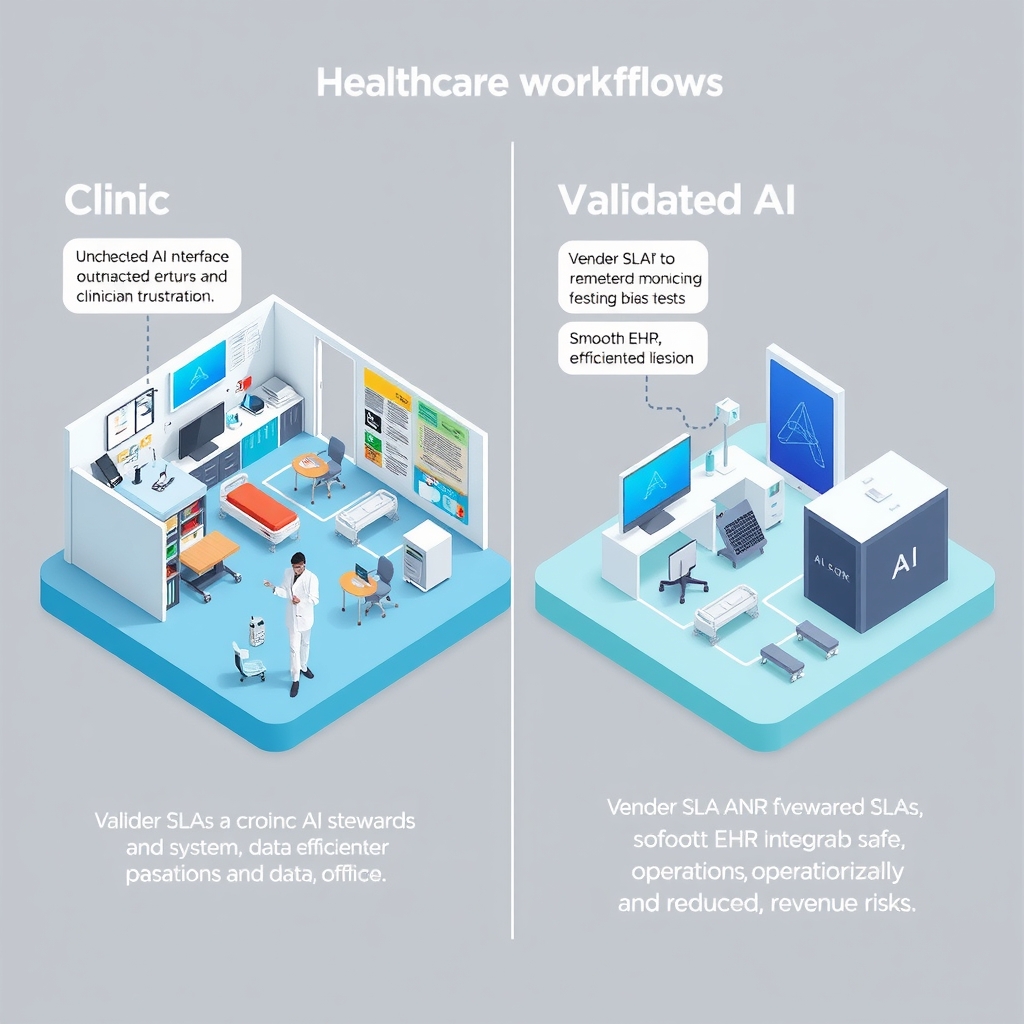
Operationally, that means new roles (AI stewards), added vendor SLAs, and integration checks into existing EHR systems before live use. Clinics that prepare standardized validation protocols and incident workflows now will face fewer surprises and lower downtime when audits or recalls occur.

Where AI affects revenue and value-based care
AI tools—whether diagnostic assistants, scheduling optimizers or documentation helpers—impact revenue through efficiency gains and risk adjustment accuracy. Tighter integration with EHR systems and digital health platforms is essential to capture billable work, reduce denials and document outcomes under value-based care contracts.
However, inadequate validation or poor workflow fit can erode revenue: clinicians may spend more time reconciling AI outputs, or inaccurate risk scores can trigger payment clawbacks. Prioritize pilot metrics tied to revenue (coding capture, visit throughput, readmissions) and set clear stop/go criteria for scale.
- Validate before you integrate: Run parallel testing in your EHR systems to compare outputs against clinician judgment and claims data.
- Map revenue impact: Link AI KPIs to concrete financial measures—coding accuracy, no-show rates, throughput—before enterprise rollout.
- Govern actively: Assign an AI steward, require vendor transparency on model updates, and embed bias and safety checks in routine compliance audits.
Conclusion: Guardrails are getting higher, not to block innovation but to make AI in healthcare operationally safe and financially predictable. Clinics that treat regulation as a design constraint—building validation, EHR integration and revenue mapping into projects up front—will reap efficiency gains without risking patient safety or payment penalties.
Leave a Reply