

A recent push for broad testosterone screening in the military raises important clinical and operational questions for providers. As a urologist, I outline downstream harms—clinical overreach, follow-up burdens, and EHR workflow impacts—so clinics can design safer screening policies.
Clinical trade-offs: overdiagnosis, treatment risks, and follow-up load
Widespread screening in asymptomatic servicemembers will increase detection of mild biochemical low testosterone that often lacks clinical significance. That drives confirmatory labs, specialty referrals, imaging, and, ultimately, prescriptions for testosterone replacement—interventions with fertility, hematologic (polycythemia), and cardiovascular implications that can permanently affect a service member’s readiness.
Those clinical cascades translate into concrete operational impacts: increased clinic visits, repeat lab draws, consult backlog, and medically non-deployable designations while evaluative work proceeds. Labs and consults create persistent tasks in EHR systems that sap clinic capacity and complicate care coordination in high-turnover military populations.
Operational mitigation: EHR workflows, digital health tools, and policy guardrails
Policy design should anticipate downstream burden. Limit screening to symptomatic individuals or those with validated risk factors; require morning total testosterone with at least one repeat test and symptom inventory before any treatment. Embed these rules into EHR systems so orders prompt mandatory fields and reflex testing algorithms to reduce unnecessary visits and duplicate testing.
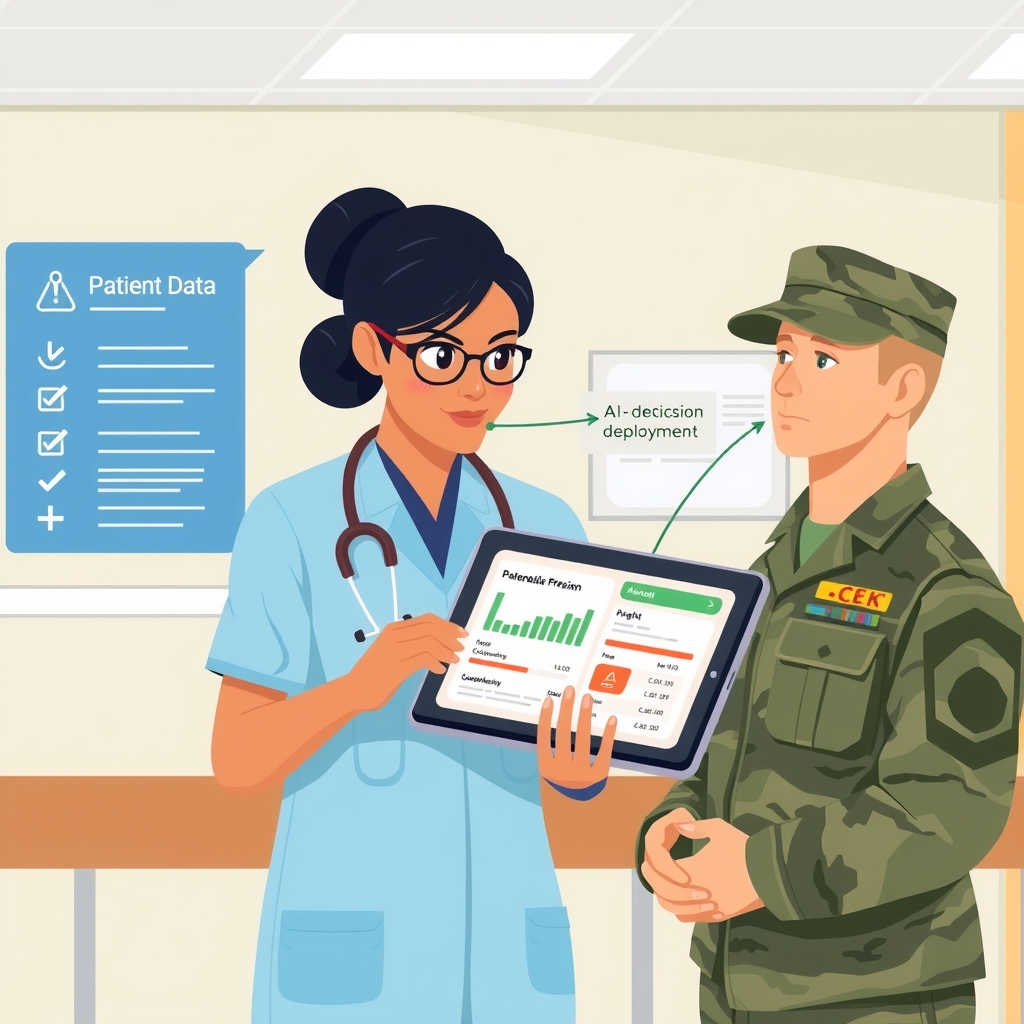
Digital health and AI in healthcare can help without replacing clinical judgment: decision support can flag inappropriate screening orders, predict patients at higher risk of adverse outcomes from therapy, and automate tracking for follow-up labs and duty-status changes. Aligning these workflows with value-based care goals—measuring outcomes, harms, and utilization—will help payers and military health leaders weigh benefits versus downstream costs.
- Target screening: Screen only symptomatic or high-risk servicemembers and require repeat morning testosterone before referral.
- Embed decision support: Use EHR order checks and digital-health alerts to prevent reflexive testing and capture follow-up tasks.
- Measure outcomes: Track downstream consults, prescriptions, adverse events, and readiness impacts to inform value-based care decisions.
Conclusion: Screening policy is not neutral—choices ripple through clinics, EHR systems, and servicemembers’ careers. Providers and leaders should pair any screening directive with clear clinical thresholds, EHR-enforced workflows, and outcome tracking to avoid unintended clinical harm and operational strain. Thoughtful integration of AI in healthcare and digital health tools can reduce low-value care while supporting value-based care goals.
Leave a Reply