

The landscape of obesity management for Medicare beneficiaries is rapidly evolving with the advent of the temporary GLP-1 Bridge program. A recent KFF analysis highlights a significant opportunity and challenge for providers: approximately 3.8 million Medicare Part D enrollees met the eligibility criteria in 2023 for this crucial program. For busy healthcare providers, understanding and efficiently navigating this new pathway is paramount, impacting both patient care and clinic operations. Embracing cutting-edge strategies, particularly those leveraging AI, is no longer optional but essential for seamless patient access and optimized revenue.
Streamlining GLP-1 Access with AI & EHR Systems
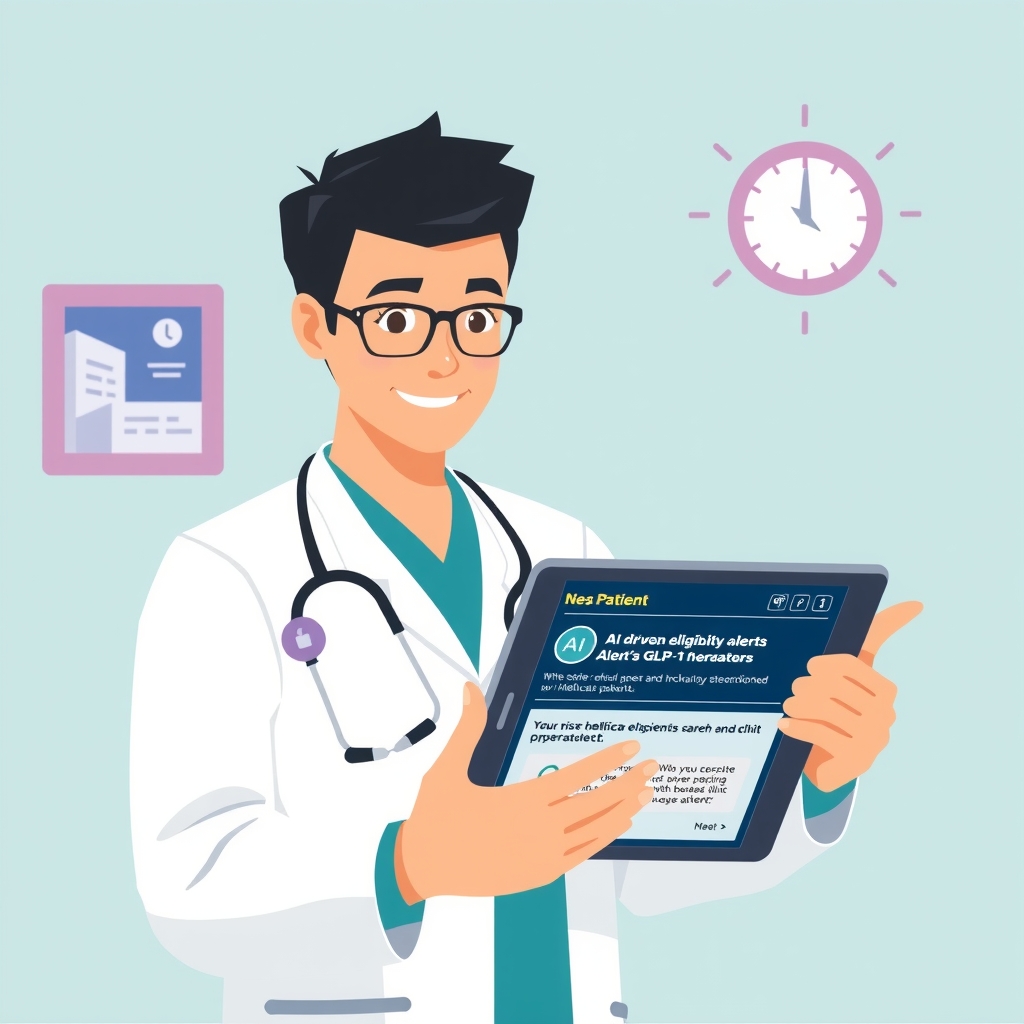
The sheer volume of potentially eligible patients for the Medicare GLP-1 Bridge program presents an administrative hurdle. Providers face the complex task of identifying those who meet the strict criteria, managing extensive documentation, and navigating the often-arduous prior authorization process. This is where AI in healthcare can dramatically transform workflow. AI-powered tools can analyze patient data within existing EHR systems to proactively flag eligible beneficiaries, reducing manual review and potential errors.
By integrating AI, healthcare practices can automate the initial screening for GLP-1 Bridge eligibility, ensuring that the 3.8 million qualifying beneficiaries are not overlooked due to operational bottlenecks. Furthermore, AI can assist in compiling the necessary clinical evidence for prior authorizations, significantly speeding up approval times and minimizing rejections. This integration of digital health solutions directly enhances efficiency, reduces administrative burden, and ensures timely access to life-changing medication for patients.
Optimizing Clinic Operations for Value-Based Care
Beyond individual patient access, the efficient management of the GLP-1 Bridge program has profound implications for clinic operations and financial health. The administrative overhead associated with manual processes can strain resources, diverting staff from direct patient care. By automating eligibility checks and prior authorizations through AI in healthcare, practices can reallocate staff time, improve overall productivity, and ensure proper reimbursement for services, directly impacting the bottom line.
Optimized GLP-1 management also aligns perfectly with the principles of value-based care. By ensuring eligible patients receive appropriate and timely treatment, providers can improve long-term patient outcomes, reduce the incidence of obesity-related comorbidities, and ultimately lower overall healthcare costs. Leveraging AI within EHR systems allows for data-driven insights into patient progress and program effectiveness, driving continuous improvement in care delivery.
Actionable Takeaways:
- Integrate AI for Eligibility & PAs: Deploy AI tools within your EHR to automate GLP-1 Bridge patient identification and streamline prior authorization submissions.
- Leverage Digital Health: Utilize digital health platforms to manage patient communication, adherence tracking, and outcome monitoring for GLP-1 therapies.
- Prioritize Data-Driven Care: Use data analytics from your EHR to assess the impact of GLP-1 programs on patient health and clinic efficiency, informing value-based care strategies.
The Medicare GLP-1 Bridge program presents both a significant opportunity and a challenge for healthcare providers. By strategically adopting AI in healthcare and integrating it deeply into EHR systems, practices can efficiently manage the influx of eligible patients. This proactive approach not only enhances patient access to critical medications but also optimizes clinic operations, driving better outcomes and strengthening adherence to value-based care models.
Leave a Reply